

A giant swarm of students pushes toward the main entrance and the end of their school day. Above the cacophony of chatter and stamping feet, Oliver Won, Aayan Alawani, and Olivia Lee announce DECA’s boba sale. Like bees of a hive mind, students swerve one by one to their new goal: getting a boba tea before they run out. The table becomes overcrowded as people hurriedly stuff dollar bills into club members’ expectant hands to rush off with their prized drink to their waiting bus.
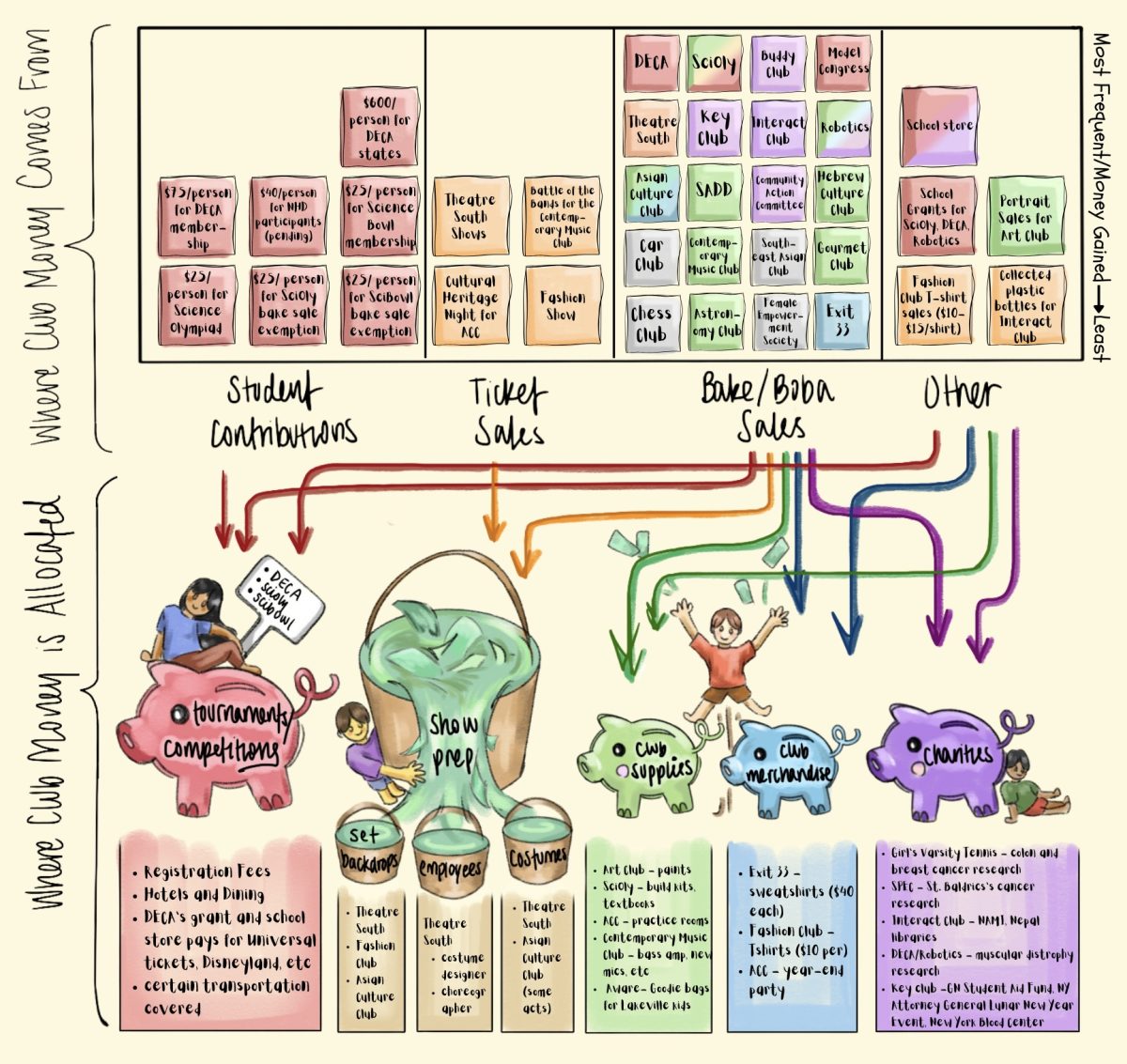
Boba tea sales, while once a novelty, have become relatively commonplace—they’re just one of many routine ways clubs raise funds for their endeavors. These “crowd-funding” methods have increased in recent years, inundating student consumers with products to buy. The infographic (right) displays how clubs raise money and where they spend it.
The scale to which some clubs use money is much larger than others, usually in proportion to the number of club members, reflected on the y-axis of the first chart. For instance, DECA and the school store (combined profits) deposited ~$104,000 last year from $75/person for 362 members, $600/person for 133 DECA state qualifiers, and the school store’s profits to use ~$93,500 of it for DECA competition registration fees, hotels and dining, and tickets to Universal Studios.
Understanding each club’s finances has a threefold effect: it can help inform whether we choose to spend money at certain bake sales, it may influence which clubs students choose to join —factoring in membership costs or a club’s focus on charitable donations—and it reveals the objectives and functions of many clubs.
Please note that due to limited space and information, not every club and club activity could be included.


