

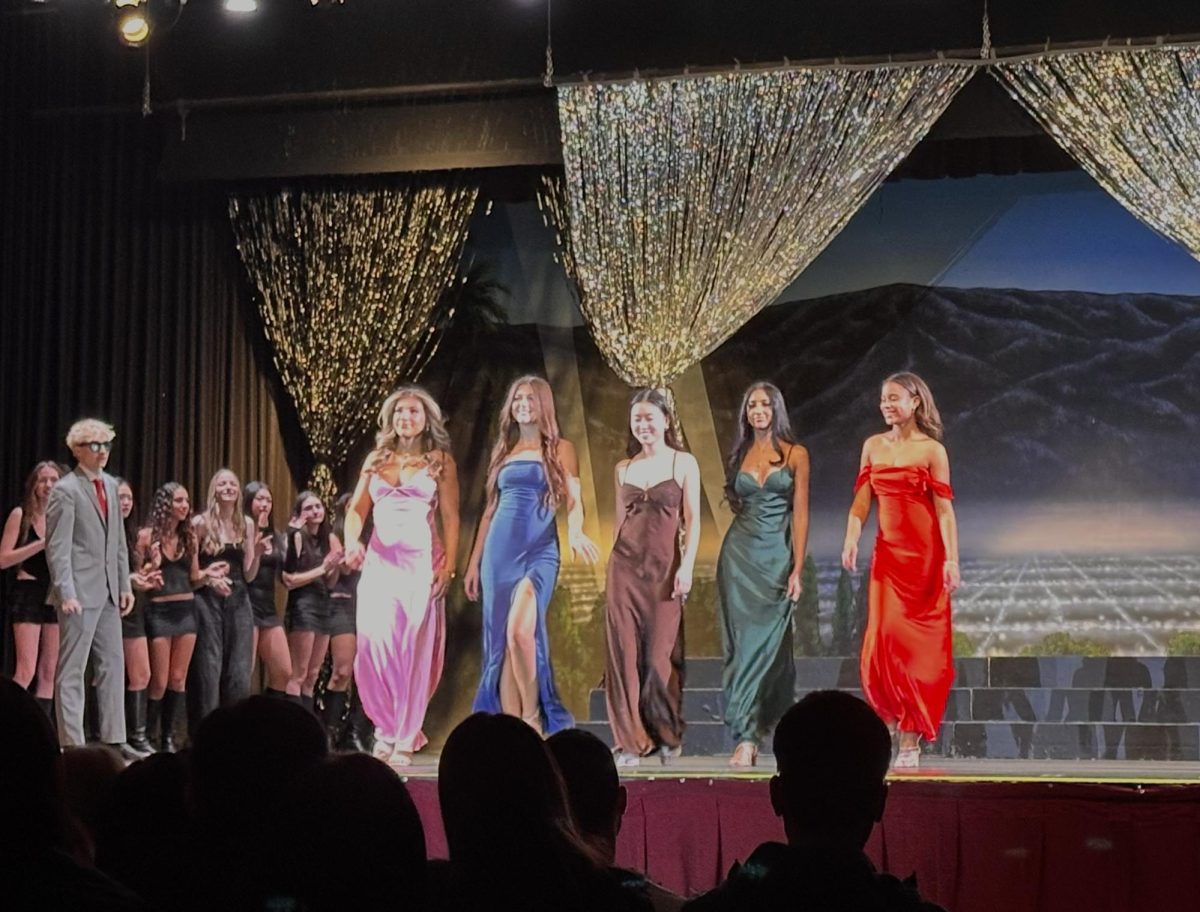
A hush falls over the crowd as the lights dim and the curtains slowly part. Boots begin to click against the stage in tempo with “FΛSHION” by Britney Manson. Illuminated beneath flashing spotlights, the models confidently strike a pose against the backdrop of metallic gold-black streamers before striding off stage. The crowd roars in response when the first dance is announced: stagecoach. Cowboys and cowgirls flood the stage-turned-runway, a sea of plaid and denim blending together as dancers flow in sync to the electric beat drops. Introducing South’s 2026 Fashion Show—music festival edition!
The fashion show has been part of South since 1986 and remains an important event today. Throughout the decades, the show has evolved significantly, adapting to the times and the meaning behind fashion.
Clothing design has always been an essential part of the fashion show, at least up until recently. In earlier years, local clothing stores sponsored members to wear pieces of their brand during the show. Students rented outfits from stores like Mixology and Infinity, showing off their personal spin on the annual theme. The show also spotlighted talented student designers who created pieces in the requested fabric and color. These designs were then walked by models, enabling designers to share their passion for fashion design with others. However, with the increase of style diversity and membership, designing clothes quickly became too time-consuming and expensive to maintain. As store sponsorships ended post-COVID and the club continued to expand, coordinators shifted from custom-made clothing to store-bought pieces. Instead of restricting students’ creativity, the change has inspired members to work harder to personalize their outfits. Students have started experimenting with various patterns and designs, showcasing bursts of creativity despite not making their clothes from scratch. “While it would be interesting to see students design their own clothes, buying outfits makes the show much more manageable and still allows for creativity through styling and accessories,” said senior coordinator Madison Coates.
The fashion show has always featured a mix of modeling and dance, appealing to both aspiring fashionistas and dancers. Each year introduces new choreographies and outfits, based on emerging fashion trends and events. In recent years, however, the show has become increasingly dance-focused, with the addition of new dance groups and an opening dance. The groups, separated by difficulty and sub-themes, help everyone feel confident while allowing more experienced dancers to challenge themselves. Students uninterested in dance can choose to model instead, ensuring a comfortable environment for those interested in both fashion and dance to show off their passion. As a whole, dance has made the show much more engaging and fun for both performers and spectators alike. Instead of weakening the show’s modeling component, dance has allowed students to showcase their outfits in motion and combine their love for fashion with dance. “Since our school doesn’t have a dance team, the fashion show is one of the only spaces where dancers can truly perform and be recognized,” said Coates.
The fashion show has come a long way since its debut in the 1990s. Over several decades, student coordinators have worked tirelessly to perfect the show, adapting to ever-shifting trends and creating the event we all know and love today.


