The gymnasium stands empty for only minutes after the final bell of the school day rings; soon, the sounds of rattling water bottles and squeaking hightop sneakers echo off the gym’s walls. Girls rush to find a well-inflated basketball, leaving the rejects behind. Outside the walls of the girls basketball practice, middle school students still listen impatiently for the signal that their last class has ended. Among those students, Hayden Kong and Elsa Lo are ready to trade in their school iPads for whichever deflated ball has been left on the rack.
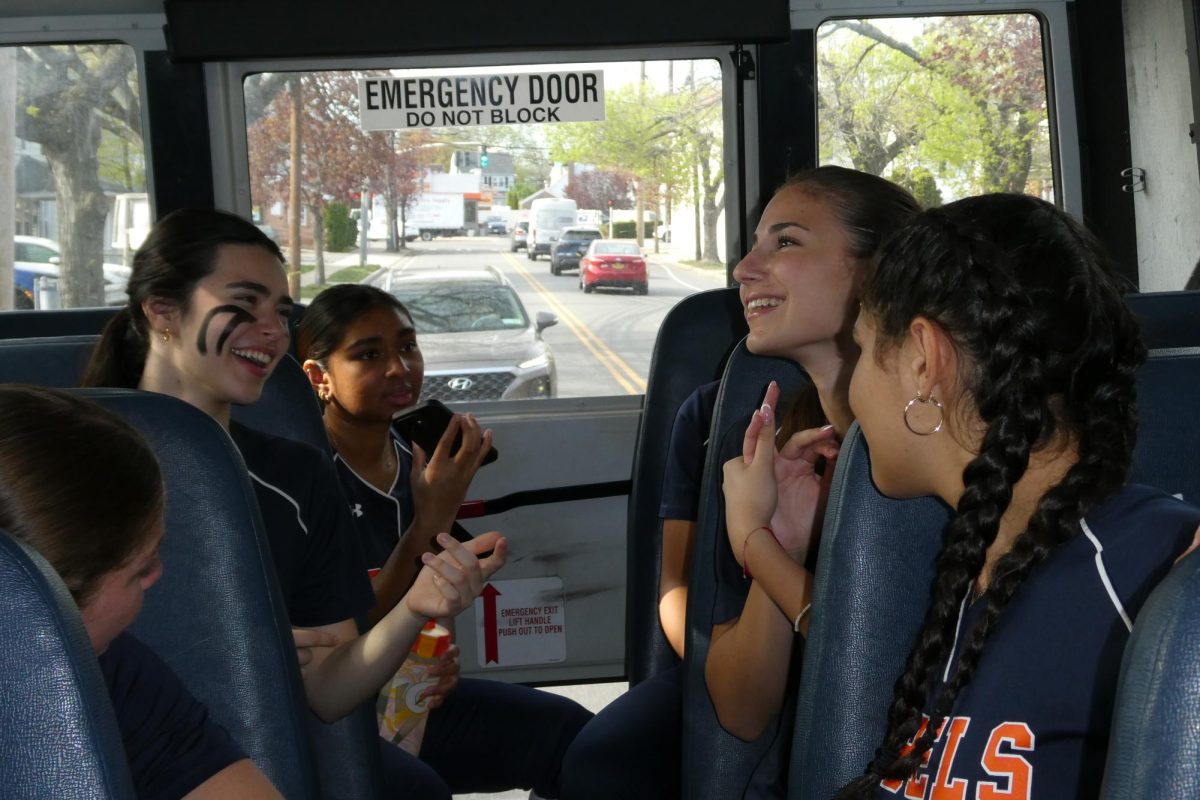
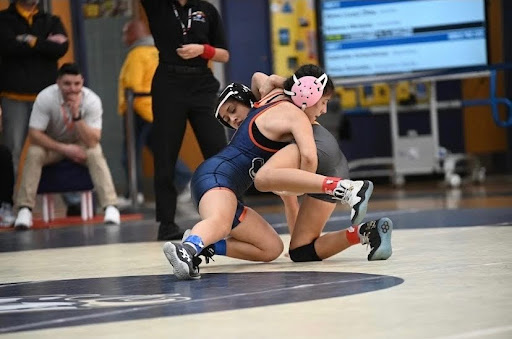
Hayden Kong and Elsa Lo, both eighth graders on the girls varsity basketball team, are only two of many middle schoolers living double lives as high school athletes. At South High, 17 middle school students played on junior varsity or varsity team this school year. In order to qualify for high school athletic teams, the middle school players must demonstrate their physical readiness through school-run clinics or statistics from outside teams. Besides being in good physical shape, middle schoolers need to be emotionally ready to take the next step with their sport.
Since middle school players are used to being “the best,” it can be difficult for them to adjust to an environment where they are not always going to win. “There’s a transition, and learning to play at the high school level, the physicality, the size, you always want to be really careful that kids don’t develop bad habits or lose their confidence,” said Ms. Michelle Sorise, head coach of the girls varsity basketball team. Most of the middle school athletes also play on competitive teams or are trained during their personal time, so their expectations of what an average practice looks like is warped, especially if they are being moved up to a high school team their first year of eligibility (seventh grade).
Hayden and Elsa are no exception to this rule, having both been recruited for the high school basketball team in seventh grade; they are almost always booked and busy in the months before and during the basketball season, attending clinics, school practices, and recreational practices for a league team. With the constant need to form a schedule around sports, it can be a challenge to balance school and a social life around the packed agenda.
“I always feel like I have no time to do schoolwork, because we always have so much basketball. When we have tests, we put more effort into the team because we are on varsity, so we have to make sure we do good with that. Everyone says that we can do schoolwork later, but there’s not that much time later,” said Hayden.
Time management also becomes a struggle due to scheduling issues. Although the high school and middle school share a building, the bell schedule is different. The middle school ends 30 minutes after the high school, which means that all athletes traveling to the high school miss a portion of their practices. The middle school also cancels practice to prioritize other events, such as Cultural Heritage Night. On the contrary, the high school coaches hold practice under all conditions. Whether it is vacation, Rebel War, or even Saturday, high school athletes are at practice. “We have practice six days a week, every week. It’s a big commitment, and the kid has to love the sport and want to be there. The parents also have to be willing to do the extra to get them there,” said Ms. Sorise.
The parents play a big role in a younger student’s athletic career. The parents/guardians of a middle school athlete are involved in the entire process, starting from the moment a coach decides a player is ready to take the qualifying agility test. Before a student knows they are able to move up to the high school, a coach discusses what is to come with the parents, so that they are aware of the commitment and physical challenges that may arise.
For a student to be eligible to compete at the high school level, they must prove their athletic capabilities by passing a physical agility test. This test consists of 20 push ups, 45 sit ups in one minute, a shuttle run, and a flexibility assessment. Their final task is to run an eight-minute mile, which the average high school student runs in 9-12 minutes, according to Healthline Media. Although they must run faster than most of their teammates, they do have time to prepare.
“We started [preparing] mid-summer, and we trained for one or two months after that,” said Hayden. The agility tests do not change depending on a student’s sport, unless that sport is swimming, where the athletes have to swim rather than run.
“I remember stressing out so much for the physical test,” said Elsa, “but once we took it, we realized it wasn’t so bad because you’re allowed to fail one category.”
The stress surrounding the test is not the only anxiety-inducing aspect of moving up a level in sports; middle schoolers must also adjust to playing alongside athletes who are both older and more experienced. “It seemed so intimidating because everyone was older and taller than me, so I felt kind of small walking in,” said Jocelyn Jia, a current freshman who played JV basketball as an eighth grader for the 2024-2025 season, “I wish I could’ve cared less about what the others thought and just accepted that it’s ok to not always do well.”
Although it can be stressful, playing with high schoolers has its benefits. Athletes are exposed to a more physically demanding level of play, giving them the opportunity to develop their skills to a higher level. The high school players act as mentors to those younger than them, giving the middle schoolers figures to look up to as they navigate the unfamiliar school and athletic experience.
“It was good to train with more experienced people. They gave me not just good advice about swimming, but also about high school,” said Alison Guo, a 13-year-old on the girls varsity swim team.
While some athletes look down upon their middle school teammates for “stealing the spot” of another player, most respond warmly by offering assistance in getting a middle schooler comfortable on a team. High schoolers often aid a young athlete by showing them around the school or helping them with their schoolwork during free time.
After all the work it took to get to the play at South High, middle school athletes give it their all in the gym, on the field, or in the pool. The energy and excitement of a seventh or eighth grader is contagious to their teammates.
Hayden and Elsa race to practice each day, ready to push themselves to become even better. “I don’t think I could picture my life without playing that sport…I am really glad that we get to play so much. Since we’re younger, we have less worries and we can focus on playing and just have more fun,” said Elsa.