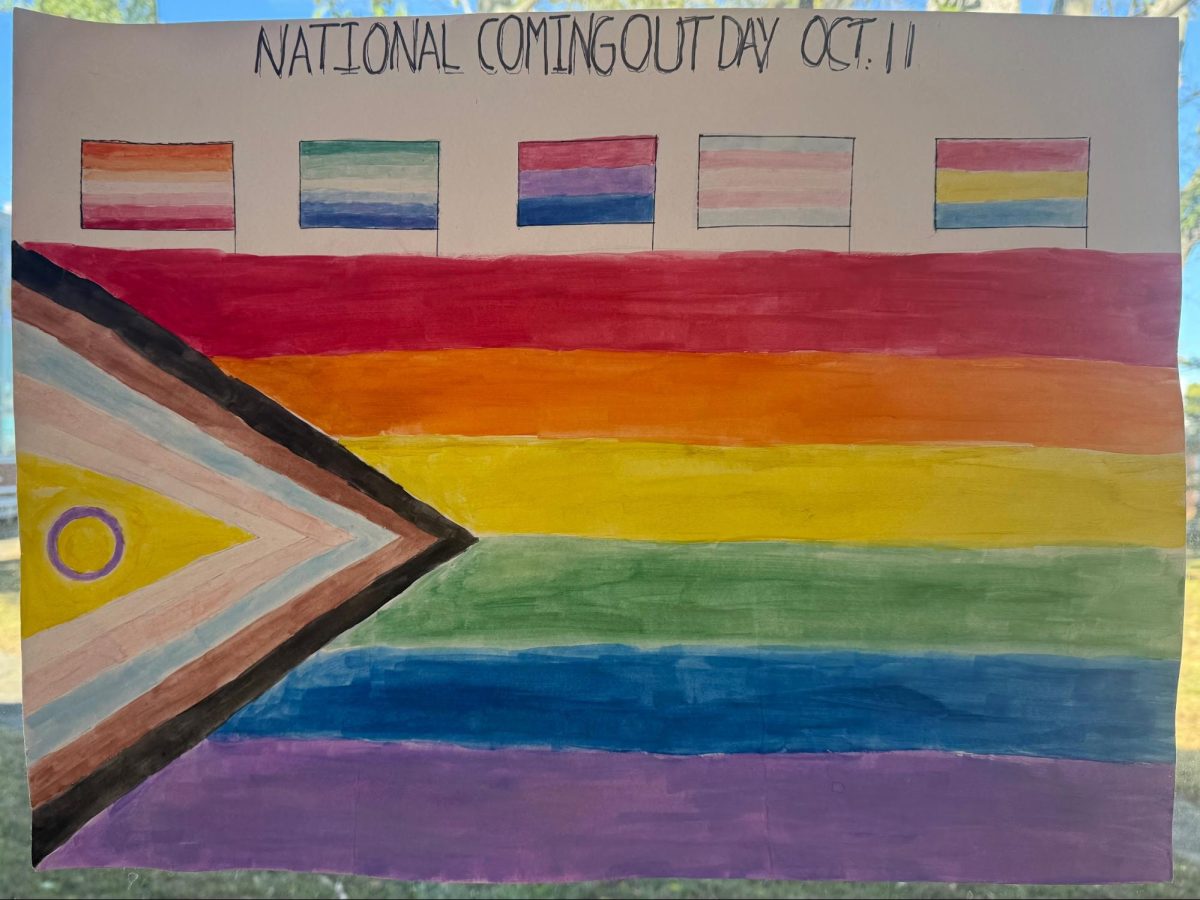
Gay marriage contested. Gender affirming healthcare revoked. Trans existences denied. The rampant anti-LBGTQ+ push frightens me and others in the queer community. We are pushed out of public spaces and forced to hide. When I check the news, I am hit with dread as threats to our existence multiply.
Yet the silent erasure terrifies me more. Overnight, proof of our fight for rights—of our existence—is expunged.
In 2016, 49 people were killed and 53 were injured at Pulse, an LGBTQ+ nightclub in Orlando, Florida. The government installed a rainbow crosswalk. In 2025, that same government repainted the crosswalk black and white.
At the Stonewall Inn, a site of a turning point in the LGBTQ+ movement, mentions of transgender individuals were eliminated. No trans flags, no progress flags, no TQ+. On the National Park Service’s website, LGBTQ+ was cleaved to LGB.
At South, it can be easy to ignore the issue of anti-LGBTQ+ sentiment. But more concerning are the ways we unknowingly enable this sentiment. The continued use of the phrase “that’s so gay” underscores our complacency.
Imagine this: A white student plays piano well, and their Asian friend comments, “That’s so Asian of you.” In this scenario, it’s a joke. The Asian person is the one making the joke, satirizing the stereotype that all Asian people play the piano.
Now imagine if two white students did the same. One plays well and the other says, “That’s so Asian of you.” That’s racism: reinforcing stereotypes, even if they seem harmless.
Someone saying, “That’s so gay,” when a friend speaks a certain way produces the same effect. Chances are, the person commenting isn’t gay. There’s no joke, no satire. Just homophobia.
As a queer student aware of this country’s debate over my identity, I’m afraid. The possibility of confiding in the wrong person scares me. Others feel the same way.
While writing this article, I sought interviews with our student body. No one was willing. Even if anonymous, many didn’t feel comfortable discussing this topic. Of course, the fear of family finding out is an issue for many. But queerphobia within South doesn’t help.
Many students and faculty support LGBTQ+ students. I know I can reach out to Ms. Greenberg, South’s social worker and GSA club advisor, about the struggles queer people face. The fact that I’m comfortable enough to write this article is a testament to this. But we can do better. As the Supreme Court prepares to rule on conversion therapy—a practice that doubles a queer person’s risk of suicide—as LGBTQ+ hotlines shut down, and as we are labeled threats, South must acknowledge the hatred we endure and the queerphobia plaguing our school. Students deserve to feel safe, not afraid. Ms. Greenberg, your guidance counselor, and the deans are always here to help, should you need it. Don’t be afraid to reach out.