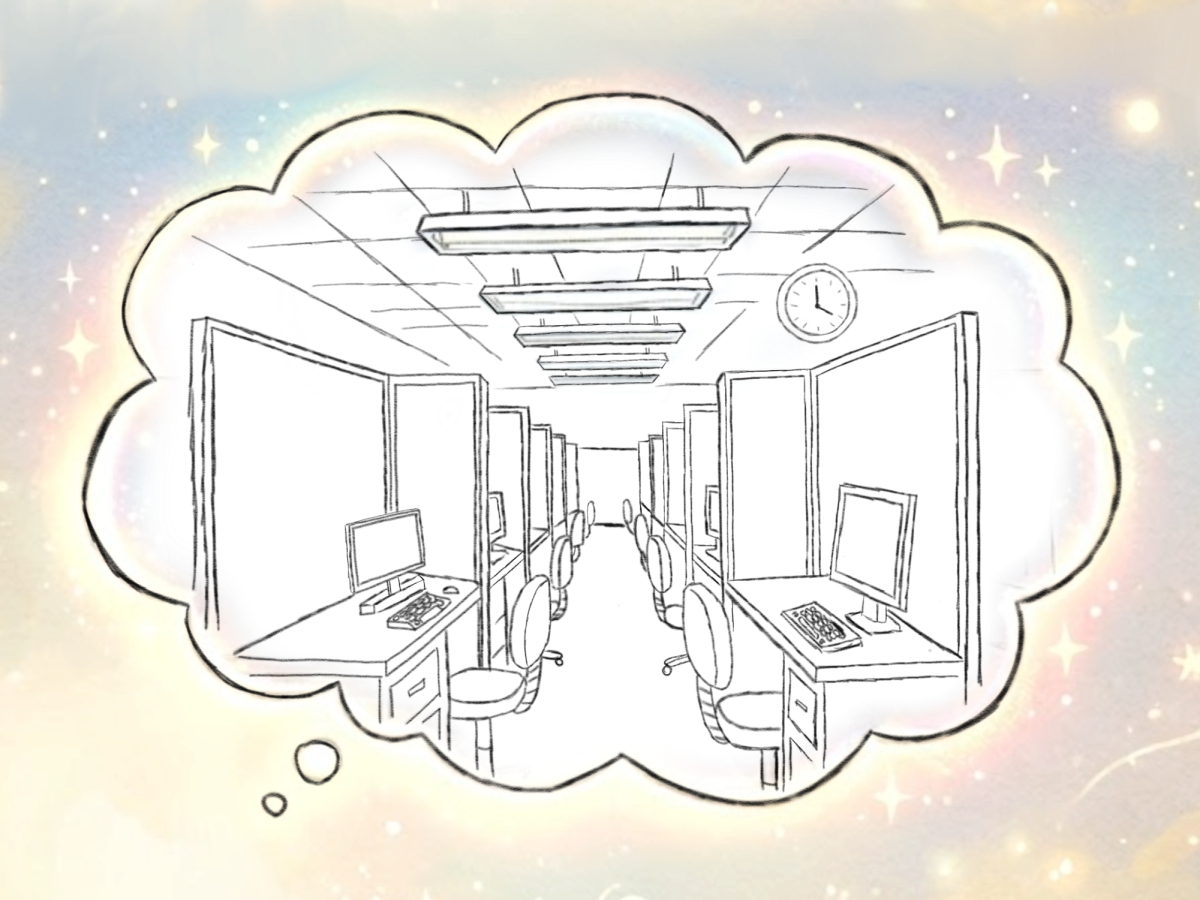
My sixth-grade year was “hybrid”: Because of COVID-19, half of my classes were held in person and half held on Zoom. One sluggish night, I dreamt that I’d missed my alarm and scrambled onto Zoom, camera off and mic muted. But when I awoke, only a tranquil silence surrounded me. Okay, I thought, my alarm didn’t ring in my dream. To verify, I checked the time: almost nine. My alarm never rang. As my dream had forecasted, I was scrambling onto Zoom with a black screen and muted mic. My middle-school self was stunned: Had I predicted the future? I supposed I had and started paying more attention to my dreams.
Over the past six years, my sleeping brain has conjured up many hypotheticals, from failed tests to faulty bagel orders. Many overshot into the fantastical, but too many predicted the future to disregard them completely. So what lies dormant in a dream?
For millennia, humans have noted the strange yet predictive qualities of dreams—so much so that an entire Wikipedia page is dedicated to works based on dreams. “Let it Be” came to Paul McCartney in a dream of his late mother. Mary Shelley claimed a dream inspired Frankenstein. Several of the most significant achievements in chemistry, from the Periodic Table to the structure of benzene, emerged from dreams. And dreams absolutely litter the Bible: Twenty-one dreams containing divine messages came to figures like Mary and Jacob.
Beyond mysticism, dreaming offers ordinary health benefits. Dreaming influences our mood, promotes emotional processing, and supports memory consolidation, according to UCLA Health. The threat simulation theory posits that dreams provide us scenarios to rehearse for hazardous situations—so maybe that dream about losing your teeth means you should brush them. Research published in the Journal of Neuroscience demonstrates that enough rapid-eye-movement (REM) sleep from dreaming prevents the development of PTSD after a frightening experience. In fact, researchers hypothesize that insufficient REM sleep—and therefore decreased dreaming—is to blame for many health issues facing Americans, says Time. The benefits of REM sleep often mirror those of dreaming, so perhaps dreaming cannot be credited with all these healthy outcomes. Still, dreamers are rewarded with both health benefits and striking predictions and discoveries.
To some, dreaming can feel inaccessible or intimidating. Many struggle to remember their dreams after waking. Noradrenaline, a hormone that keeps us alert, decreases during our most vivid REM dreaming, and our alarm clocks cause a spike that worsens our memory of dreams, according to a BBC article. The article adds that a rapid descent into sleep may also contribute to poor dream retention since many remember their dreams during “hypnagogic dreaming,” a trancelike state that occurs early in the sleep cycle and diminishes in intensity the more quickly we fall asleep. Furthermore, frequent nightmares can be upsetting.
But even for those suffering distorted or missing dreamscapes, simple remedies exist. To improve dream retention, try to lie still upon waking. Paying attention to your dreams permits you to recall them as you would any other memory. Repeating a mantra like I will dream tonight before bed and keeping a dream journal may also help. In most cases, having a consistent, relaxing bedtime routine can also alleviate nightmares.
Caught up in sleep hours, we often ignore slumber’s kooky, compelling pal: dreaming. Those who brush off dreams lose them beneath the blanket. But those who don’t learn to tame and parse these absurd yet insightful mental movies, cannot rewind them in their waking hours when they need them most. Historical leaders and thinkers harnessed the power and insight of dreams, so why shouldn’t you? Don’t just sleep to sleep—sleep to dream.