Dear Great Neck South Administration and Technology Committee,
When Spotify first appeared on our school iPads this fall, word spread like wildfire—students immediately launched Mosyle, typed ‘Spotify’ with jittery anticipation, and watched the green icon bloom onto their home screens like a long-awaited lifeline. That green icon meant more than just music to our ears. It was a splash of color against the grayscale of a new school year—one marked by recent policies, such as New York State’s cell phone ban, enacted to minimize distractions, promote equity, and boost students’ engagement. Yet for many students, it has meant losing access to their small sonic sanctuaries, where music once helped them study, focus, and unwind between classes.
Seeing Spotify felt like a flicker of warmth and familiarity—it sparked instant joy among students, as if the administration were saying, We hear you. That support was enough to motivate us to face the demands of another school year: college applications, tests, sports competitions, and more. However, that excitement was short-lived, as Spotify disappeared just as quickly as it had appeared. Like a bad breakup, it left our hearts bruised and heavy, a mix of disbelief, frustration, confusion, and longing.
In an interview with Mr. DiPasquale, South High’s assistant principal, I learned that data security, communication features, potential distractions, and bandwidth were among the concerns discussed at a recent board meeting that ultimately led to Spotify’s removal. One challenge, which Mr. DiPasquale described perfectly, is the “pipe” of bandwidth. “The more things we add, the smaller that pipe gets,” he explained. Apps with video or interactive features, such as those for communication or commenting, can cause disproportionate bandwidth usage for educators and distract students, defeating the purpose of the cell phone ban.
In fact, Spotify was removed primarily because of its new in-app messaging feature, which Mr. DiPasquale described as “a pathway where personal information could be exchanged,” something “[the district’s tech department] can’t disable.” He also explained that our school iPads are linked to Great Neck accounts, not individual Apple IDs, which is why Apple Music was immediately ruled out.
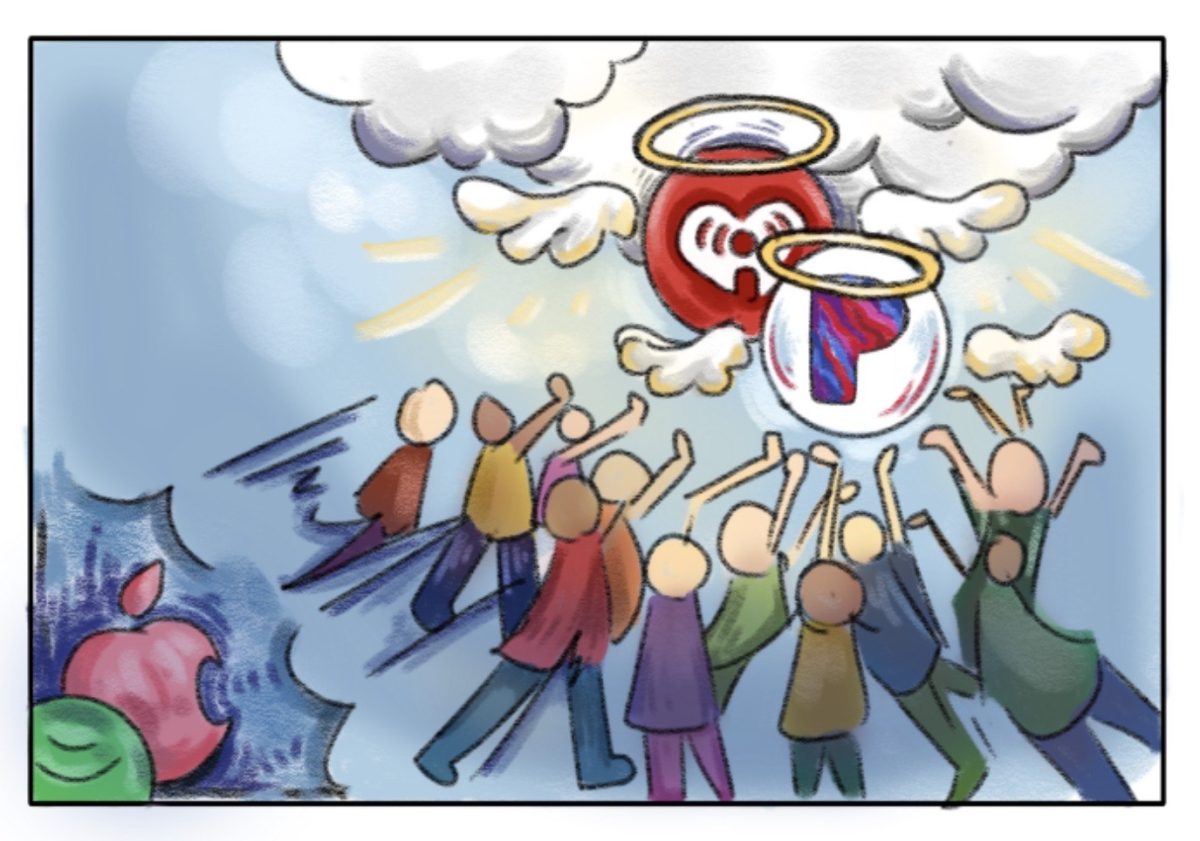
After carefully reviewing these concerns and conducting extensive research, I respectfully propose a solution that restores students’ music privileges while fully aligning with administrative priorities. Rather than opening a Pandora’s box with the risks associated with Spotify or Apple Music, we can provide students with safe, controlled alternatives, such as Pandora Music (pun intended) and iHeartRadio Music. These alternatives provide the benefits of music while avoiding the pitfalls of streaming platforms like Spotify and Apple Music—and here’s why.
Since its official launch in 2011, iHeartRadio has been built around live and curated radio, offering an all-in-one audio service with millions of podcasts and music playlists that can be streamed anywhere, on any device. Its privacy policy is transparent about data collection, clearly stating that IP addresses and device identifiers are used only to deliver content to your device and provides users with clear choices and opt-out options. Importantly, iHeartRadio’s child-directed platforms do not collect personal information from users under 13 without parental consent, demonstrating sensitivity to privacy concerns that can be leveraged in educational settings like South High.
Similarly, Pandora operates like a personalized radio with automated song selection, allowing users to adjust profile visibility and keep activities private. While it collects listening preferences and device information for analytics and advertising, it lacks features like messaging or commenting, which reduces student engagement. Additionally, it offers opt-out options for certain sharing or advertising. With Pandora, users can curate “stations” by genre, decade, artist, or mood—and even stream podcasts across categories like art and design, news, politics, self-improvement, sports, and more.
Both platforms, therefore, provide robust music experiences and offer what administrators want: a radio-style, listen-only experience with no messaging and minimal data collection. These apps simply play music and podcasts. As Mr. DiPasquale puts it, “We just want a radio, basically.” So why not give students one?
It’s clear that administrators are rightly concerned with data security and controlled access; however, it’s equally important to recognize the significant role music plays in students’ daily lives. On October 14, The Southerner Instagram released a poll that garnered 329 views, asking students about their feelings on the Spotify ban. The results were striking: 96% of students voted that they cared very strongly about losing access to Spotify and desired music privileges, compared to just 4% who reported it had little effect.
Students were also asked how big a role music plays in their lives, and responses overwhelmingly leaned to the far end of the slider, reflecting the depth of their musical engagement. When prompted to elaborate, students shared that music helps them relax before tests, stay productive during free periods, or, in their own words, “lock in!”—among many other reasons. This data clearly demonstrates that music is not just a pastime but an essential tool that supports focus, well-being, and academic performance.
While students’ voices clearly show the importance of music in their daily lives, administrators recognize its value as well. Mr. DiPasquale reflects, “I’m a big supporter of music during the day. I think most of the administrators, if you walk in at some time, we’re listening to music, not from our phones, but from the internet, because it helps us. It’s soothing.”
From an arts standpoint, he explains, “When you refer to students who play instruments, learning instruments, [music is] a very big part of that. So students should be exposed to music in those classes….but then when we transition to art…if you’re an artist and you’re drawing, painting, sculpting, whatever it is, music is really important there too, whether it’s personal or just something that’s playing.”
It goes without saying that these contexts are suitable for music, whereas instructional times are certainly not. As students, we recognize that music is a privilege. With controlled access to safe platforms like Pandora and iHeartRadio, we will honor the administration’s responsibility to maintain a secure, distraction-free environment and our need for moments of calm, inspiration, and productivity. Together, we can create a school culture where music supports learning, fuels creativity, and reminds us all that even in the busiest of days, there is a time and place to press play.
Thank you.