Readers and writers explore the human experience through literature. From ancient explanations for the seasons to modern coming-of-age romances, we have used stories to reflect on ourselves and the world we live in. Unfortunately, our world entails reprehensible phenomena; murder, sexual violence, and other morally bankrupt actions seem inextricable from our existence.
Literature often depicts these phenomena, which may at first appear counterintuitive. Why spotlight evil actions? However, stories mirror real life. So when life entails disturbing experiences, stories naturally depict the same.
Just like we recoil at certain real-life occurrences, we recoil at their depictions. Some might instinctively condemn stories that feature subject matter such as murder, rape, and incest. This reaction is understandable; to view reprehensible actions as such shows moral sense and empathy. However, this response does not differentiate between the depiction of an action and that action itself. Literature’s inclusion of disturbing subject matter does not equate to endorsement of that matter.
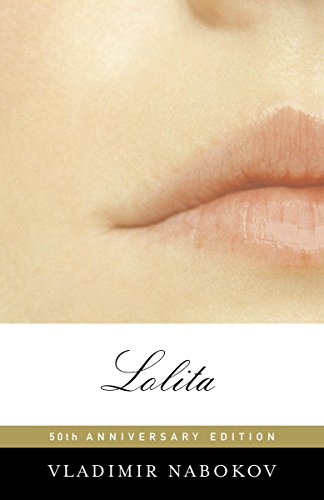
Readers understandably misinterpret stories that revolve around moral wrongdoing. When the crux of a work is rooted in evil, how could that work be anything but? Let us examine one of the most misunderstood depictions of evil in literature: Vladimir Nabokov’s novel Lolita, or the Confession of a White Widowed Male. Lolita follows unreliable narrator Humbert Humbert, a middle-aged European man, and his sexual and romantic obsession with twelve-year-old Dolores Haze, whom he nicknames “Lolita.” After Dolores’s mother dies, Humbert assumes full guardianship of Dolores. As Dolores grows up, her relationship with Humbert grows strained: Dolores grows colder toward him, and a jealous Humbert grows more controlling.
A quick, spoiler-light summary of Lolita does not capture the evil the novel depicts. Humbert is, in clear terms, a pedophile, rapist, and abuser. Upon learning of Lolita’s premise, some understandably denounce the novel as indistinguishable from the harm it portrays. However, Lolita knows that its contents are reprehensible. Nabokov himself described Humbert as “a vain and cruel wretch who manages to appear ‘touching’” (Gold). Though Humbert is the novel’s protagonist and narrator, no morality accompanies his central role. This may seem counterintuitive, as we generally connect with main characters and associate them with positive or redeeming qualities. Lolita subverts this expectation—the novel confounds readers’ learned desire to identify with protagonists, thereby creating the discomfort central to its premise.
As part of Lolita’s narrative structure, Humbert frames himself as a victim of uncontrollable love. For instance, he claims that Dolores seduced him, despite having groomed and raped her. Confusion might arise if readers do not distinguish between Humbert’s framing and Nabokov’s framing. Lolita is not a retelling of events by a real-life author; it is Humbert’s in-universe confession to his crimes, hence its secondary title. In fact, the novel features a foreword by Humbert’s fictional lawyer, who prefaces that while Humbert may write sympathetically, his actions are evil. Upon realizing that Lolita is a warped account of crimes committed by its in-universe author, readers should understand that Nabokov does not seek to endorse or justify Humbert’s actions. The incongruence between Humbert’s crimes and his whitewashed retelling of them explores how abusers warp their perceptions of reality to justify their wrongdoing. Lolita as a novel is not morally reprehensible; its narrator’s actions are. Though some condemn Lolita for depicting evil, the novel criticizes the same actions with which these people take issue.
Readers can think a work’s content as heinous as they’d like; however, a fair assessment of a work requires readers to examine the context in which its story unfolds. While knee-jerk negative reactions to taboo topics such as rape, pedophilia, and incest are valid, discerning readers should consider what functions these topics serve in a work.
Furthermore, literature does not have to explicitly condemn wrongdoing to depict it in a valid manner. Sometimes, a reprehensible character simply exists. The work that depicts them might not outright condemn them, nor is it obligated to. Literature is not required to directly convince readers of the morality or immorality of its characters and events; readers should independently make these judgments.
It is worth nothing that there are indeed irresponsible ways to handle sensitive topics—not all depictions of disturbing subject matter are valid or accurate. Some literature misrepresents sensitive topics and makes dangerous suggestions in the process. Some literature includes sensitive topics gratuitously, thereby reducing real experiences to trite plot devices. And some literature explicitly endorses morally reprehensible actions. In these cases, it is fair to criticize a work and its contents. However, readers should carefully consider any piece of media before deeming it worthy of such criticism.
Literature, like any artistic medium, serves as a channel through which people express their struggles, worries, criticisms, and more. We understand this on a basic level, especially when engaging with media that humanizes its creators and reminds us of the context that surrounds every work. For example, when musicians sing of obsessive love and self-destructive tendencies, we do not usually jump to criticize their depictions of unhealthy relationships and harmful coping mechanisms. This is because we understand that a song is more than its contents, that a person exists behind the music they write, and that we should take into account intent when evaluating creative output. The same goes for any piece of media. Artists have a responsibility to convey their intent, but people should not dismiss a work as “wrong” or “problematic” without considering why it depicts what it does. Furthermore, people should curate their own media consumption experiences. Nobody is obligated to consume media that disturbs them, but provocative media is not obligated to downplay itself. Art is not meant to be constrained to the “good” end of the spectrum of human experiences. No matter how uncomfortable a work of art might make us—whether it be a movie, song, or book— we must not fault it solely for what it depicts.