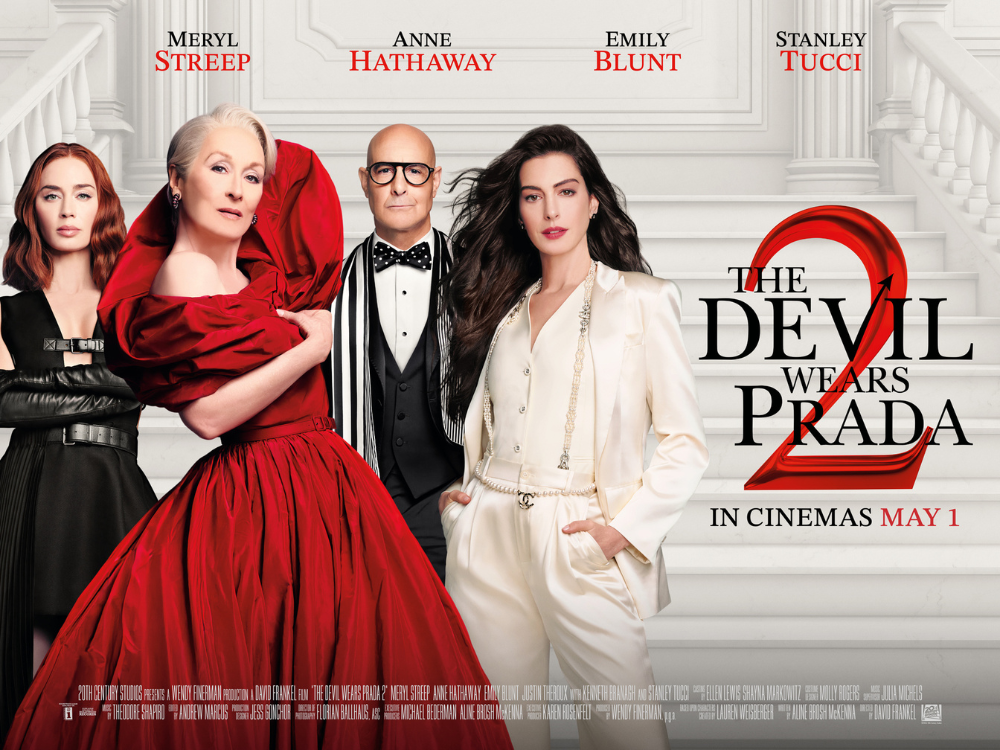
Twenty years after audiences first entered the ruthless, seductive fashion industry, the world of Runway is back, colder than ever. Back in 2006, audiences were introduced to a world where a single editor could launch careers, dictate trends, and determine what millions of people would wear. In the original movie The Devil Wears Prada, fashion was not just about fashion. It was about power. It was about ambition. It was about the sacrifices people had to make in pursuit of success. Now, nearly two decades later, The Devil Wears Prada 2 returns to that same world, but finds it transformed beyond recognition.
At first, everything seemed the same. The glamorous designer clothing remains. The sleek magazine offices remain. Miranda Priestly’s intimidating presence remains. However, beneath that surface lies a new reality. Runway, once an untouchable institution, is struggling to survive. Print journalism is slowly losing the fight against algorithms. Expertise and true journalism is increasingly overshadowed by clickbait and the chase of virality. The sequel shows that the biggest problem is no longer how to reach the pinnacle; it is how to stay up there while the ground beneath you is changing.
When the release of The Devil Wears Prada 2 was first announced, a massive wave of nostalgia, excitement, and skepticism emerged, the news quickly taking over social media. The original movie was a landmark in pop culture, a staple in the American movie industry. With its predecessor success, The Devil Wears Prada 2 faced high expectations, accompanied by hesitation. Audiences wanted something familiar, but also something new. Too much nostalgia can make the movie feel repetitive, while too much change would drive away longtime fans. However, the producer, Wendy Finerman, understood this balance perfectly; because of this, the sequel immediately became a massive box office hit, grossing over $643 million worldwide. Initially, I was expecting a light-hearted, nostalgic comedy, but the actual film subverted my expectations; the movie features a narrative filled with emotional depth and existential themes. Familiar characters explored new questions about relevance, influence, and adaptation, meaningfully addressing our current media climate.
One of the major factors in this sequel’s success is how the producers approached reinvention. The original move focused on ambition and the pursuit of success, showing the world what it takes to reach the top of the ladder. The sequel asks a different question: what happens after success has already been achieved? The characters are no longer struggling to prove themselves, no longer trying to reach the pinnacle. Instead, they are struggling to stay at the top and adapt to a world that’s rapidly changing around them. While the sequel occasionally relies on its audience’s affection for its original characters, its greatest strength lies in its willingness to evolve. This willingness in approach gives the story an emotional depth that many sequels lack or fail to replicate. As a result, the movie feels like a meaningful continuation of the story. Rather than relying solely on the fame and nostalgia of the original film, this sequel explores a different universal human experience: the realization that the identities that we once spent years pursuing may not be permanent.
The theme of reinvention becomes even more powerful because it reflects anxieties that extend beyond the film itself. What makes this film particularly relevant is its reflection of contemporary culture. In an era where trends can disappear overnight and influence is measured through clicks and engagement, the movie raises the question whether expertise still matters. The film repeatedly places traditional editorial values in conflict with data-driven decision making, depicting how authority is slowly measured through engagement rather than expertise. Quality journalism has been overwhelmed with low-effort, opinionated content, devaluating editorial integrity. Although the story takes place within the fashion industry, the concerns it raises extends far beyond Runway. This is a reality and a matter of concern for anyone in industries that continue to shift and evolve with new technologies and time.
The film communicates these concerns not only through its storyline, but also through the very thing that defines the franchise: fashion. Like the original film, The Devil Wears Prada 2 uses fashion as a symbol rather than an aesthetic. The clothing in the sequel is undefinably luxurious, yet the outfits often reveal insecurity rather than confidence. Characters often appear impeccably dressed while privately questioning their place in a rapidly changing industry. This contrast highlights the gap between appearance and reality, suggesting that success looks effortless from the outside, even when there’s anxiety and uncertainty beneath the surface. Fashion becomes a carefully constructed mask, allowing characters to maintain some remnants of control and project achievements while concealing fears of irrelevance and failure. By using fashion to conceal vulnerabilities, the movie challenges the glamorous images that social media and people tend to promote while criticizing a culture that values appearance over authenticity. The film demonstrates that true fulfillment doesn’t come from maintaining a flawless image, but from embracing the insecurities hidden beneath it.
This reevaluation is especially present in Miranda Priestly. From the original film, audiences view Miranda Priestly like an untouchable force of nature, capable of bending the industry to her will with her iron fist and a quick glance from her cold eyes. Here, this belief is challenged. Miranda faces an opponent that she can not intimidate, negotiate with, or control: change itself. In doing so, the film challenges the idea of permanent authority. No matter how powerful someone becomes, influence is always dependent on systems that can eventually change without them. The movie humanizes Miranda, allowing viewers to see the fear that came with success as the world begins to move on without you. On the outside, Miranda is still the same, donning wardrobes of effortless sophistication and her iconic cat-eyed sunglasses. However, now, her outfits act more like a shield during emotional moments, maintaining her facade to the outside world. Her decline in authority is especially visible in management meetings. As someone who once ended conversations before they even began, Miranda is forced to take a backseat and squeeze into the unfamiliar role of an observer in a meeting dominated by younger management figures. She is lost within the world of audience engagement metrics and viral content strategies, revealing that expertise no longer guarantees authority in a world increasingly driven by algorithms.
For a movie based on luxury brands and gowns, the movie The Devil Wears Prada 2 has surprisingly little to do with fashion. Instead, it explores the universal experience of navigating a ship in the ever- changing tides of the world. Through its nuanced portrayal of aging, relevance, and reinvention, the film transforms fashion into a metaphor for the fragile nature of success. Fashion, for once, is used as the backdrop to communicate the larger challenge of remaining relevant in life. The Devil Wears Prada 2 argues that success is never a permanent destination. It highlights the struggles of staying anchored in a changing world and the art of staying afloat amidst the storm, a lesson that extends far beyond just fashion.